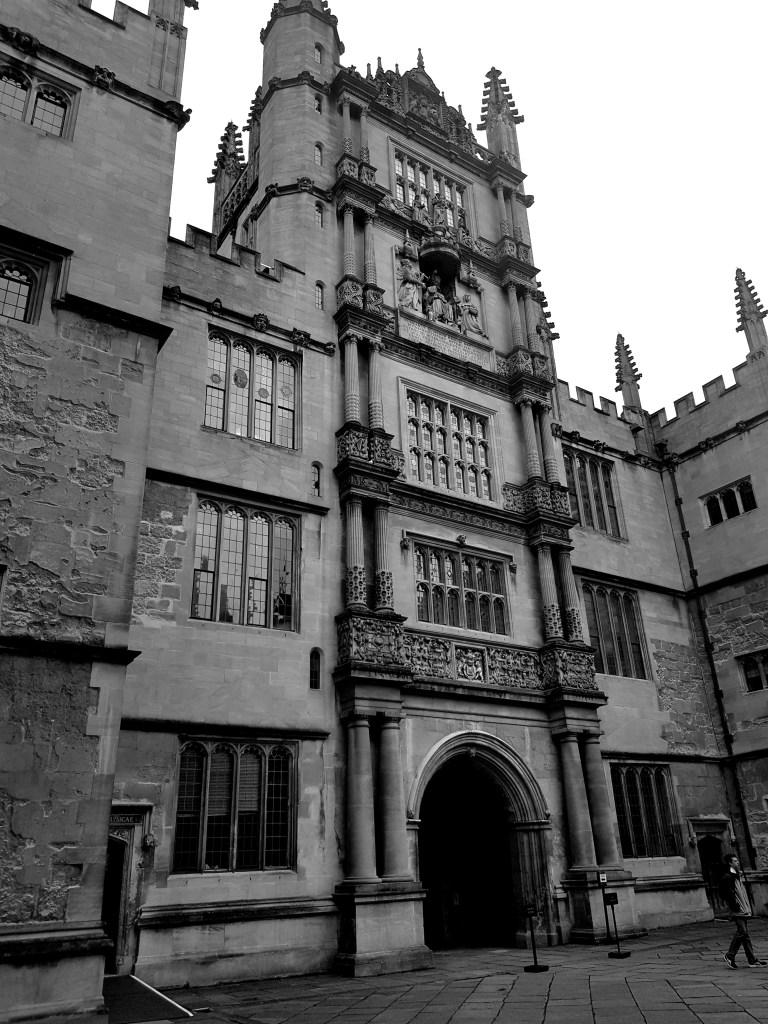
The Bodleian Library
Success consists of going from failure to failure without loss of enthusiasm.
– Winston Churchill
As I headed into my second lecture in communicating science, I wasn’t excited or eager as I was for the first. In fact I was anxious. I was worried. There was a lot on my mind. I started receiving my exam grades and they were not as I hoped they would be. When I walked into class, I reflected on the first lecture and how we had to talk about things that made us anxious. Fear of failure was mine. Professor Lewis’ advice resonated in my mind for a few minutes before I regrouped. He said ‘if you never try something and fail it, then you will never get better’. It made so much sense at this particular moment than before. And it was up to me to now to focus ahead.
The lecture was delivered in two sessions. In the first, we embarked on how science hits the news. The stages the information passes through to make headlines. I quickly saw my role as a scientist in making sure the media report accurate scientific information. Science isn’t fancy or entertaining, so over the years, it has had its fair share of twisted truths to make it newsworthy. In the long run, hurting real research. It was satisfying to know that scientists are involved in how the media report scientific information. I learned how to structure press releases, making them enjoyable to read and follow. Titles are everything! It must draw the reader to the story and it should be able to tell the entire story.
The second session with Chloe Kembery from the British Council painted us a picture of how science makes news from the journalist’s point of view, and what news the media wants. A press release is one approach used to communicate scientific news to journalists. She elaborated on key aspects that make stories newsworthy. Stories must be timely, relevant to target audiences, have a wow-factor and be relatable. I learned that the flow of content in a press release matters a lot, vital information must form the first sentences of the article. We had a short engaging workshop on how to translate journal articles into a summarised press release article. This was a useful task to practice with, ahead of our press release assessment.
What I love about this class so far is each lecturer talks to us about their career paths and how they got to do what they do today. This is very inspiring. I was particularly impressed by Chloe’s passion for journalism and science. As she gave us a brief overview of her career, I couldn’t help it but wander off in my thoughts. I reflected on my career till that moment and whether it will be what I continue to pursue in the next five years.
This is certainly more than just a class.
 My Science Diary